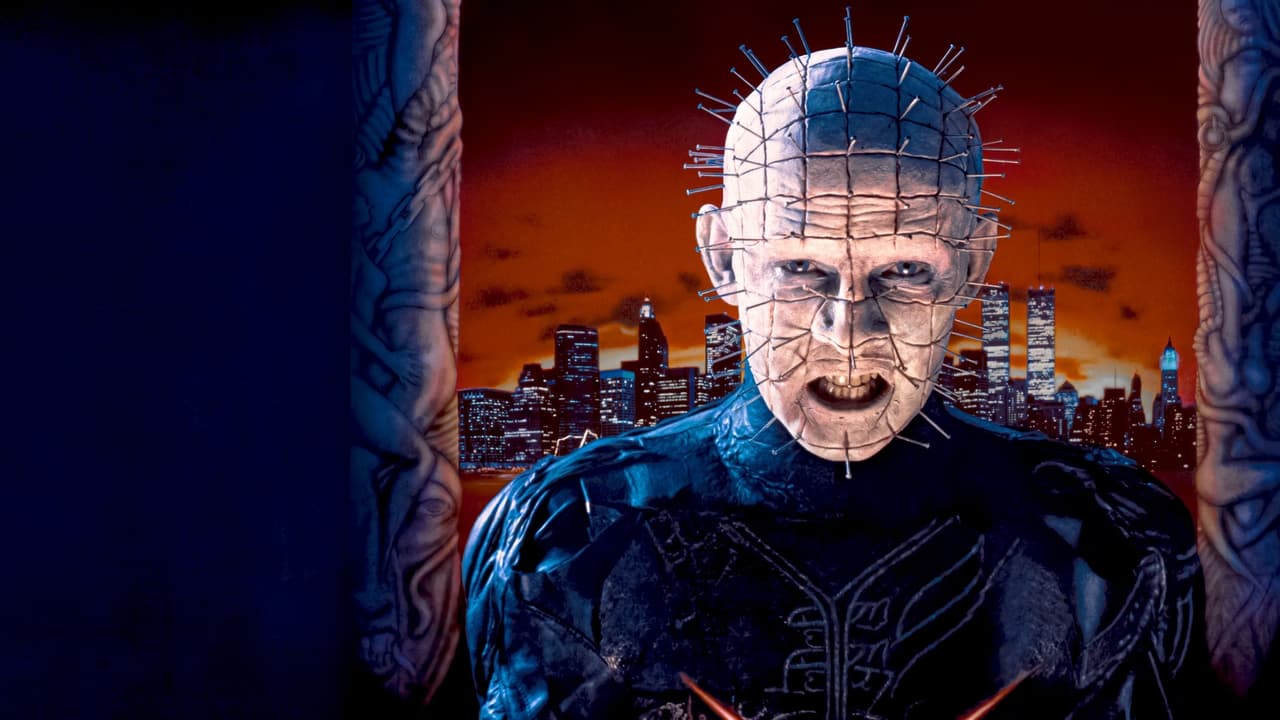
The flickering static clears, but the image that burns onto the screen isn't the familiar, claustrophobic dread of the Cotton house or the labyrinthine corridors of the Channard Institute. Instead, it's something grotesque and monumental: a twisted pillar of screaming flesh and metal, pulsing with trapped souls, displayed like a piece of nightmarish modern art. This is Hellraiser III: Hell on Earth (1992), and right from the start, it signals a shift – Pinhead is off the leash, and Hell is coming stateside with an entirely different kind of infernal energy.

From Personal Damnation to Urban Apocalypse
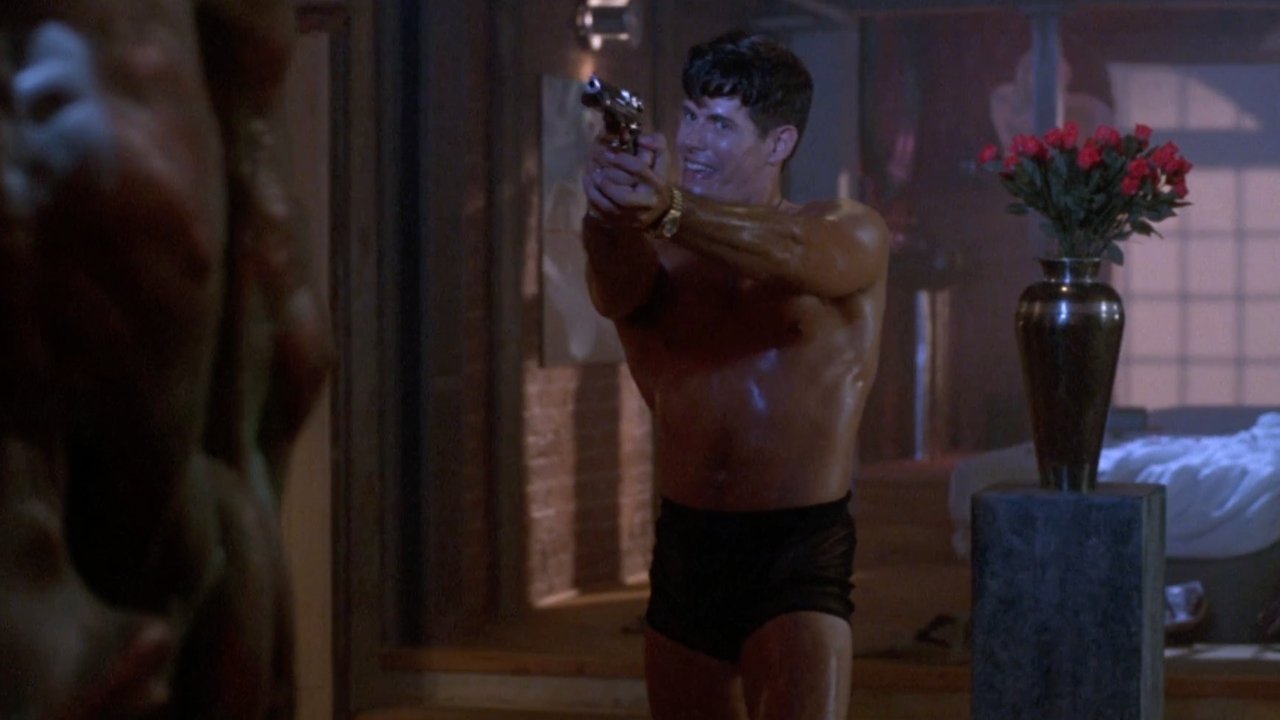
Where Clive Barker's original Hellraiser (1987) and Tony Randel's deeply unsettling Hellbound: Hellraiser II (1988) felt like intimate descents into personal hells, this third installment, helmed by Anthony Hickox (of Waxwork fame), blows the doors wide open. It’s less about the seductive allure of forbidden experience and more about the raw, destructive power of unleashed evil. There's a distinct early 90s, post-Gulf War vibe permeating the film, a sense that the carefully constructed boundaries are crumbling. The story, conceived by Randel and scripted by Peter Atkins, cleverly uses the Pillar of Souls – acquired by decadent, arrogant nightclub owner J.P. Monroe (Kevin Bernhardt) – as the vessel for Pinhead's fractured essence, separating the calculating demon from his human anchor, Captain Elliot Spencer.
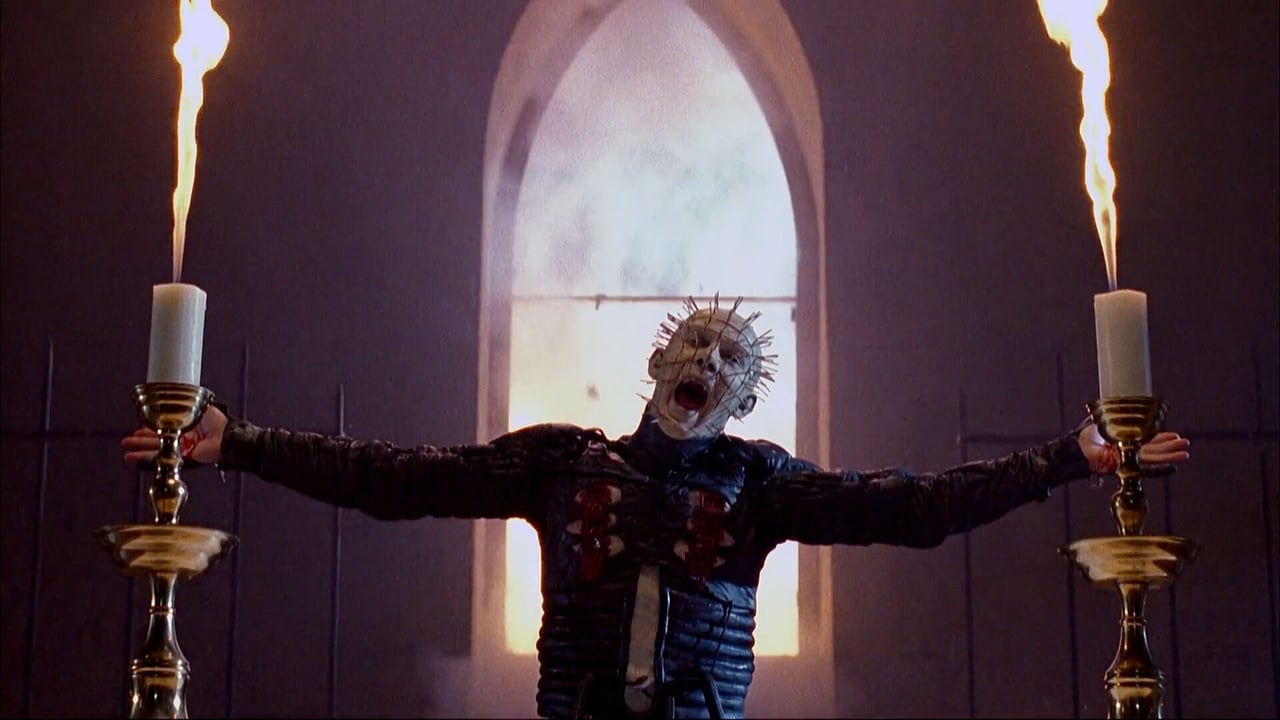
This split is perhaps the most fascinating, and controversial, aspect. We see Doug Bradley, ever commanding as Pinhead, essentially playing two roles. Spencer haunts the dreamscape of our protagonist, ambitious TV reporter Joey Summerskill (Terry Farrell, bringing a determined energy before her journey to Star Trek: Deep Space Nine), warning her of the impending doom. Meanwhile, the freed Pinhead, unbound by the old rules of Hell, becomes a malevolent force of pure chaos. This wasn't quite the Pinhead fans knew; he was more actively destructive, more prone to dark quips ("I am the way," he blasphemously declares), stepping closer to the slasher icons of the era. It's a testament to Bradley's chilling presence that even with this shift, Pinhead remains utterly terrifying. Reportedly, Barker himself had reservations about this more overtly 'evil' direction, a departure from the character's original status as an explorer of extreme sensation beyond good and evil.
Welcome to the Nightmare on Main Street
Anthony Hickox brings a different sensibility than his predecessors. His direction is slicker, faster-paced, favouring explosive set pieces over slow-burn dread. The infamous Boiler Room nightclub massacre is the film's grisly centerpiece – a sequence of pure, unadulterated carnage that likely pushed the boundaries for many viewers back in the day. Pinhead strides through the club, turning partygoers into Cenobites reflecting their earthly obsessions (or perhaps just what was lying around the FX shop). We get the infamous CD Head (Brent Bolthouse), whose projectile compact discs feel like a uniquely dated, yet somehow still disturbing, weapon of choice. Then there's Camerahead (Ken Carpenter), whose lens becomes an instrument of death, and the Bartender Cenobite (also Carpenter), mixing Molotov cocktails with demonic flair.
These new Cenobites, designed by Bob Keen's effects team (returning from the previous films), are undeniably creative, if perhaps lacking the perverse, organic horror of the original quartet. They scream "early 90s music video nightmare," but the practical effects work remains impressive. The sheer visceral impact of the massacre, with chains whipping through crowds and flesh contorting, still hits hard. Filming this sequence reportedly involved meticulous choreography and clever use of squibs and prosthetics to create the illusion of mass slaughter. It's pure spectacle, a far cry from the intimate horrors of the first film, aiming squarely for a broader audience – a move likely encouraged by the involvement of Miramax's Dimension Films, who saw franchise potential. Budgeted at around $5 million, it aimed for, and achieved, greater box office success ($12.5 million) than its predecessors, proving the commercial appeal of a more action-oriented Pinhead.
Retro Fun Facts: Hell Raising Trivia
It's worth noting that the film's unrated cut, often sought out by VHS collectors, offers a significantly different experience, particularly restoring more graphic gore and altering the fate of Paula Marshall's character, Terri, making her journey even more tragic. Keen-eared viewers (and metalheads) will also remember the contribution from Motörhead; Lemmy Kilmister penned the track "Hellraiser" (famously covered by Ozzy Osbourne for his No More Tears album around the same time) and the band even makes a brief cameo during the Boiler Room scene. Lemmy also wrote the specific track "Hell on Earth" for the movie, cementing its hard rock connection. Filming primarily took place in North Carolina, giving the "Hell on Earth" scenario a distinctly American feel, a deliberate move away from the British origins of the series.
The Legacy of Unleashed Pinhead
Hellraiser III: Hell on Earth occupies a strange space in the franchise. For some, it's the point where the series lost its arthouse horror soul, embracing a more conventional, albeit gorier, slasher formula. For others, it's a wildly entertaining slice of early 90s horror excess, finally putting Pinhead front and center as the star attraction. Terry Farrell makes for a capable protagonist, fighting against cosmic evil with journalistic tenacity, but the focus is undeniably on Doug Bradley's iconic creation.
The film's ambition is undeniable, even if it sacrifices some of the philosophical dread of the originals. It aimed to bring Hellraiser to the masses, and in many ways, it succeeded, paving the way for the numerous direct-to-video sequels that would follow, gradually diminishing the Labyrinth's power with each iteration. Does it hold up? As a continuation of the first two films' specific atmosphere, perhaps not entirely. But as a bold, bloody, and often outrageous piece of 90s horror cinema featuring one of the genre's greatest villains cutting loose? Absolutely. It has that distinct feel of a tape you’d rent on a Friday night, knowing you were in for something loud, messy, and memorably horrifying.

Rating: 6/10
Justification: Hellraiser III delivers undeniable spectacle and gore, finally unleashing Pinhead in a satisfyingly chaotic way, bolstered by Doug Bradley's unwavering presence. The practical effects, especially during the nightclub massacre, are a highlight of 90s horror excess. However, it sacrifices the unique atmospheric dread and philosophical underpinnings of the first two films for a more conventional, action-horror approach, and the new Cenobites border on silly. The shift in Pinhead's character, while offering brutal fun, dilutes some of his mystique. It's a solid, often entertaining sequel, but a noticeable step down in depth and originality from its predecessors.
Final Thought: While perhaps marking the beginning of the franchise's mainstream dilution, Hellraiser III remains a potent blast of 90s horror energy and arguably the last time Pinhead truly felt like a big-screen threat before descending into the direct-to-video depths.