What happens when the man who has everything is given… nothing? Or perhaps, everything he didn’t know he needed, wrapped in the guise of absolute chaos? That's the chillingly precise question pulsing beneath the slick, corporate surface of David Fincher’s 1997 thriller, The Game. Watching it again after all these years, far removed from the initial buzz and those chunky rental tapes, the film retains a remarkable power to unsettle, forcing you to question not just the protagonist’s reality, but the very foundations of control we try to build in our own lives.
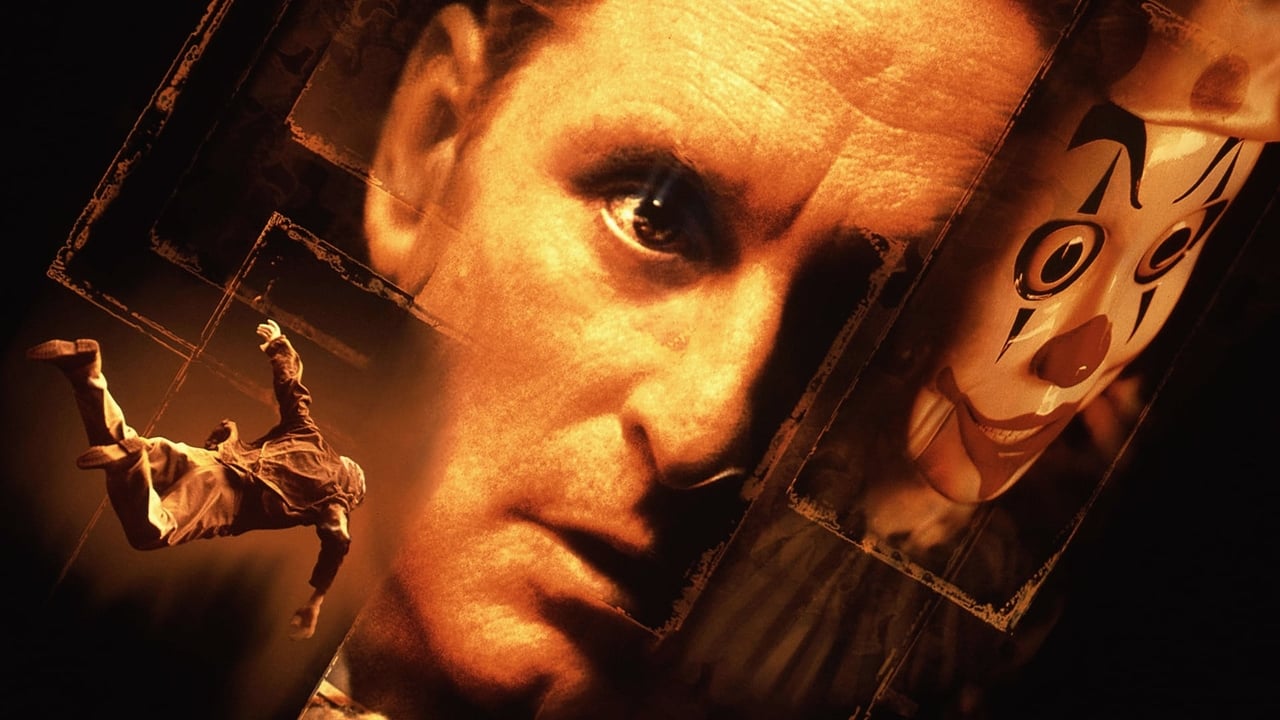
An Invitation You Can't Refuse
We meet Nicholas Van Orton, played with masterful reserve by Michael Douglas, as a man encased in wealth and emotional permafrost. He’s a San Francisco investment banker whose life is measured in stock tickers and solitary luxury, haunted by the memory of his father's suicide at the same age Nicholas is now turning – 48. Enter his estranged, free-spirited brother Conrad (Sean Penn, radiating weary charisma in a brief but crucial role), who gifts Nicholas a unique birthday present: an invitation to participate in a mysterious "game" facilitated by the enigmatic Consumer Recreation Services (CRS). Skeptical but bored, Nicholas signs up, unwittingly triggering an avalanche that will strip away every certainty in his meticulously ordered world.
What follows is a masterclass in escalating paranoia. Set in a pre-millennial world just before the internet and mobile phones completely tethered us, Nicholas's isolation feels chillingly plausible. Small anomalies snowball into life-threatening crises: cryptic clues, staged accidents, financial ruin, betrayals. Is it all part of the elaborate game, or has something genuinely sinister infiltrated his life? Fincher, fresh off the suffocating darkness of Se7en (1995), crafts an atmosphere thick with dread. The crisp, desaturated cinematography by Harris Savides presents San Francisco not as a vibrant city, but as a cold, labyrinthine trap, mirroring Nicholas's internal state.
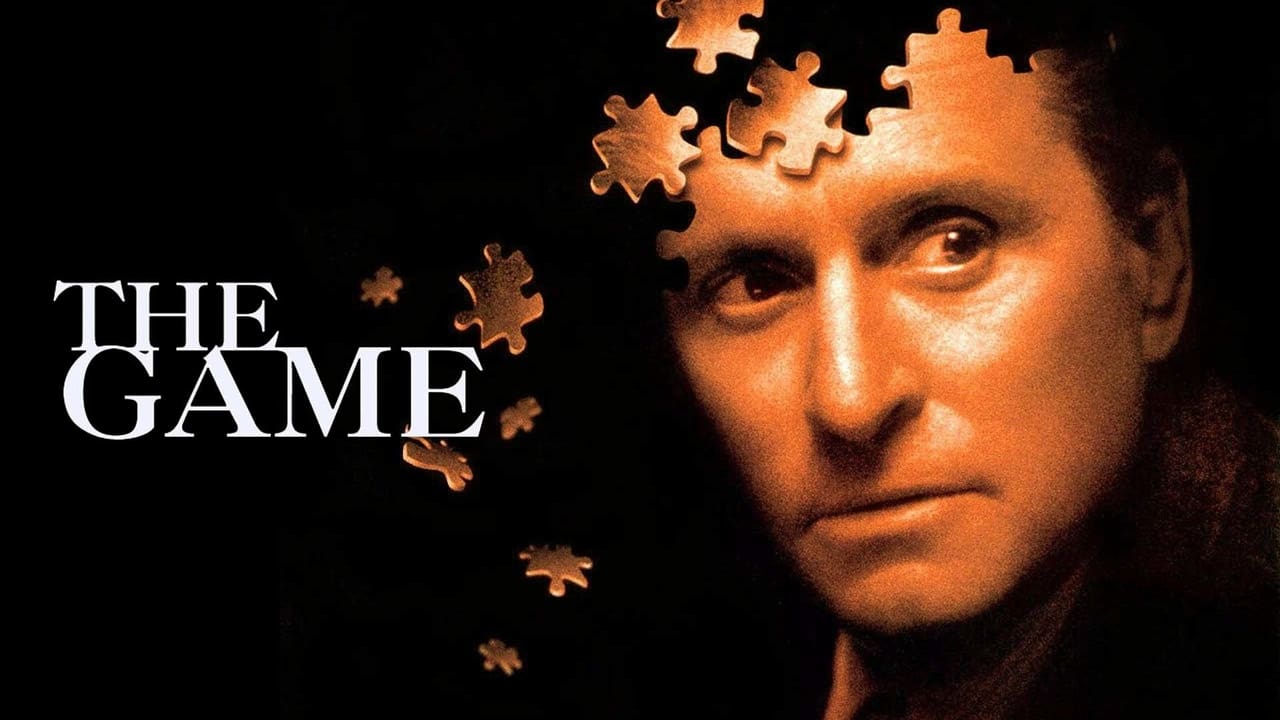
The Unraveling of Nicholas Van Orton
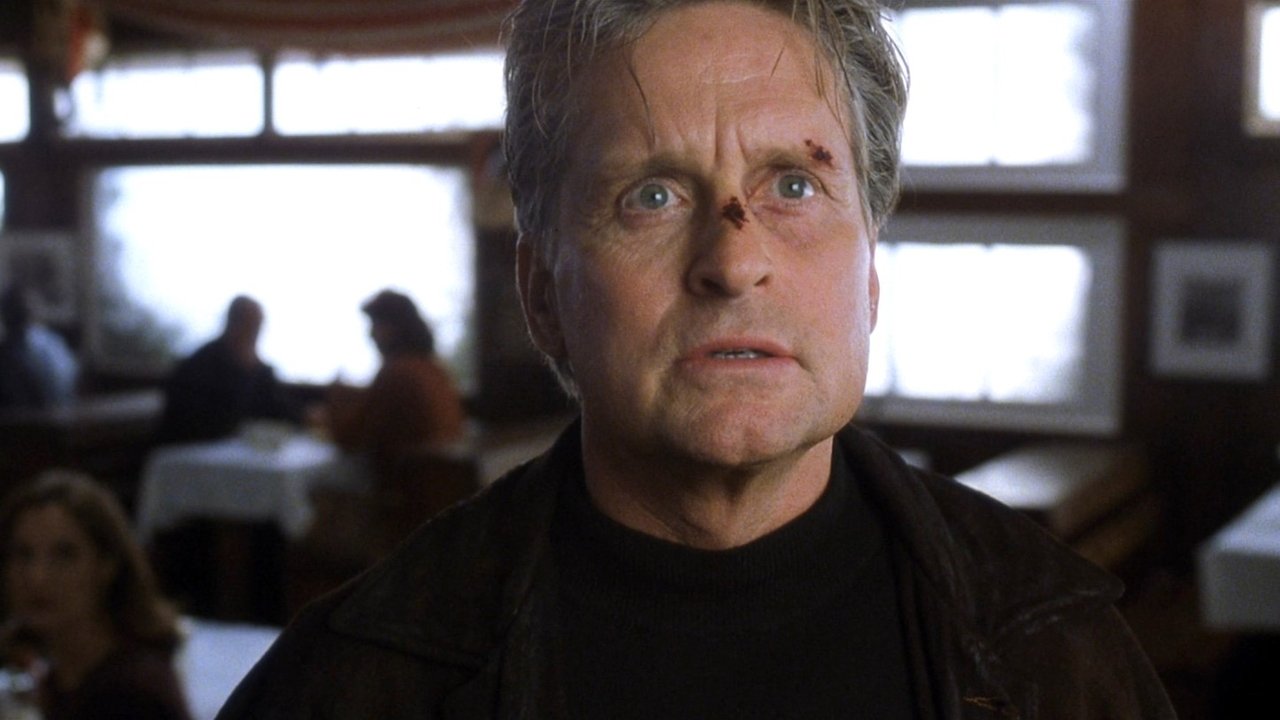
Michael Douglas is simply superb here. Building on the archetype of ruthless financiers he explored in films like Wall Street (1987), he portrays Nicholas not just as cold, but as brittle. His initial arrogance and control slowly crack, revealing raw fear, desperation, and ultimately, a profound vulnerability. It’s a performance built on nuance – the flicker of panic in his eyes, the tightening of his jaw, the gradual shedding of his bespoke armor. We see a man forced to confront the hollowness at his core, the life unlived. Supporting players like Deborah Kara Unger as the ambiguous Christine add layers of uncertainty – is she ally, pawn, or orchestrator? Her presence keeps both Nicholas and the audience perpetually off-balance.
Fincher's Fingerprints

Even in this relatively early work, Fincher's meticulous style is undeniable. His precise framing, the deliberate pacing that allows tension to coil and strike, and the unsettling score by Howard Shore all contribute to the film’s suffocating grip. It’s fascinating, looking back, to see how The Game serves as a crucial bridge between the gothic horror of Se7en and the anarchic social commentary of Fight Club (1999). It explores similar themes of identity, control, and the desperate search for meaning within the confines of modern life.
Interestingly, the script by John Brancato and Michael Ferris had lingered in Hollywood for several years before Fincher boarded. At one point, it was attached to director Jonathan Mostow (Terminator 3: Rise of the Machines), and an early iteration even considered Jodie Foster for the lead, requiring significant rewrites when Douglas became involved. Fincher’s commitment brought the project to life, infusing it with his signature dark vision. While perhaps not having the notoriously grueling production stories of some of his other films, The Game was still a complex undertaking, demanding precise execution to make its central conceit believable, even within its own heightened reality. It performed respectably at the box office (pulling in around $109 million worldwide on a $48 million budget) but truly found its audience on home video – a perfect late-night rental that sparked countless conversations.
Legacy of the Game
Does the elaborate structure ultimately hold up? The film’s ending remains a point of contention for many viewers, a narrative tightrope walk that some find audacious and others find implausible. Fincher himself has reportedly expressed some reservations about it over the years. Yet, this ambiguity might actually be part of its enduring appeal. The Game isn’t just about the twists; it's about the journey Nicholas takes – the deconstruction of a man forced to reconnect with his own humanity through extreme, manufactured adversity.
Remember watching this on a CRT, the flickering images enhancing the sense of disorientation? There was no immediate web search to confirm theories, just the mounting tension in your own living room, maybe hitting rewind to catch a missed clue. That shared experience, the puzzle-box nature of the plot combined with Douglas’s compelling central performance, cemented its place as a standout 90s thriller.
Rating: 8/10
The Game earns its high marks for David Fincher's masterful direction, Michael Douglas's riveting performance, and its sustained atmosphere of expertly crafted paranoia. It’s a sleek, intelligent thriller that perfectly captures a specific late-90s anxiety about control and reality. While the much-discussed ending might divide opinion, the journey there is undeniably compelling and meticulously executed. The film’s ability to manipulate the audience mirrors the manipulation of its protagonist, making for an intensely engaging, if sometimes uncomfortable, viewing experience.
It leaves you pondering long after the credits: how much of our own reality is constructed, and what would it take for it all to fall apart? A question as relevant today as it was when CRS first opened its doors.