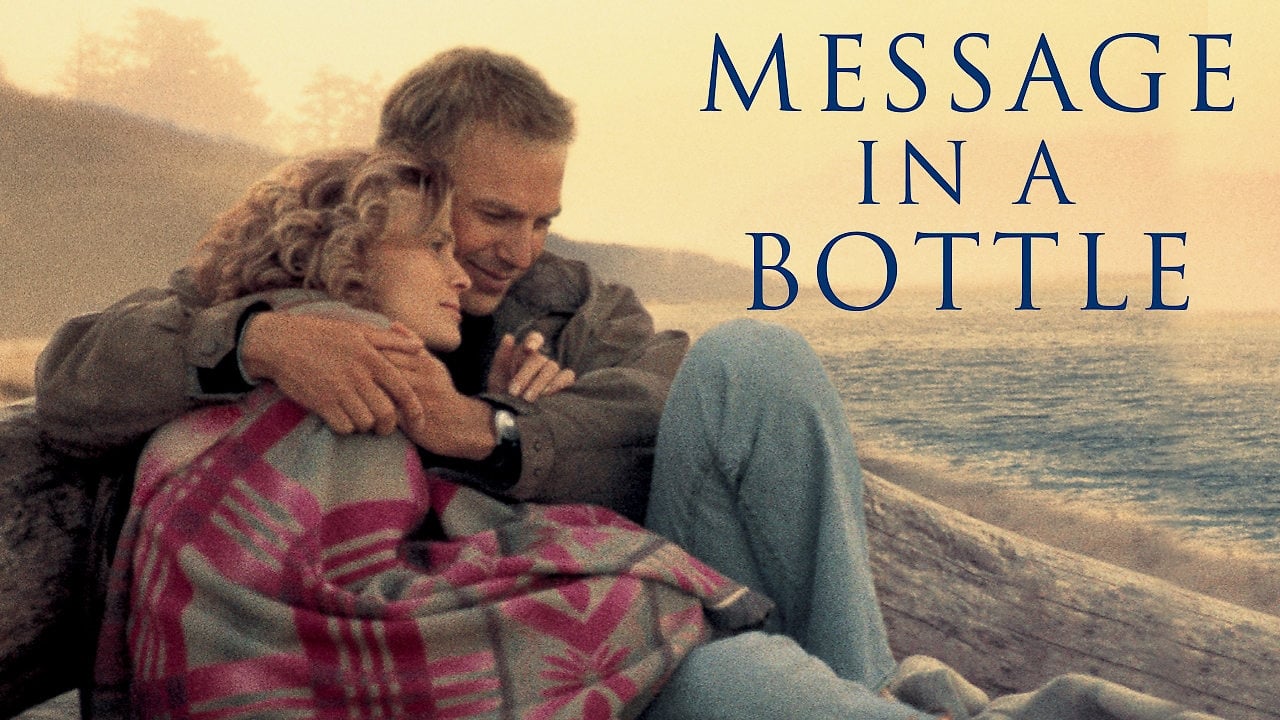
Okay, fellow travelers through time and tape, let's drift back to the cusp of the new millennium, a time when the romantic drama often aimed for earnest emotion, sweeping visuals, and bona fide movie stars. Remember finding that promising cover art on the shelf at Blockbuster? Sometimes, nestled amongst the action flicks and sci-fi epics, you’d find something quieter, something aiming straight for the heart. And in 1999, one such vessel arrived in the form of Luis Mandoki’s Message in a Bottle. Does the message within still resonate after all these years?

A Whisper from the Waves
The film begins not with a grand statement, but with a quiet discovery. A glass bottle, barnacle-kissed and sea-worn, washes ashore on Cape Cod. Inside, a letter – raw, poetic, aching with love and loss, addressed simply to "Catherine." It finds its way into the hands of Theresa Osborne (Robin Wright), a researcher for the Chicago Tribune, divorced and perhaps adrift herself. There’s an almost primal pull to the words she reads, a vulnerability laid bare that cuts through the cynicism of her everyday life. Wright, always an actress of intelligence and subtle strength, conveys Theresa’s immediate fascination, the spark of curiosity that quickly ignites into something more profound, more personal. It's a setup that feels both intensely literary – a throwback to epistolary romance – and deeply cinematic. Who wouldn't want to know the story behind such a heart-wrenching letter?
The Lighthouse Keeper of Grief

Theresa's journalistic instincts (and perhaps a yearning she doesn't fully admit) lead her to the Outer Banks of North Carolina and Garret Blake (Kevin Costner), the letter's author. Costner, then still radiating that grounded, all-American charisma honed in films like Field of Dreams (1989) and Dances with Wolves (1990), embodies Garret as a man encased in grief. He restores boats, lives a solitary life shadowed by the memory of his deceased wife, Catherine. There's a quiet intensity to Costner's performance here; he doesn't overplay the sorrow, opting instead for a kind of weathered stoicism. Garret isn't just sad; he's stuck, anchored to the past, and the film takes its time exploring the weight of that loss. It’s worth remembering this was adapted from the first published novel by Nicholas Sparks, the author who would essentially corner the market on tales of love, loss, and coastal scenery for the next two decades. Message in a Bottle carries the seeds of that familiar formula – profound connection shadowed by impending heartbreak.
Navigating the Currents of Connection
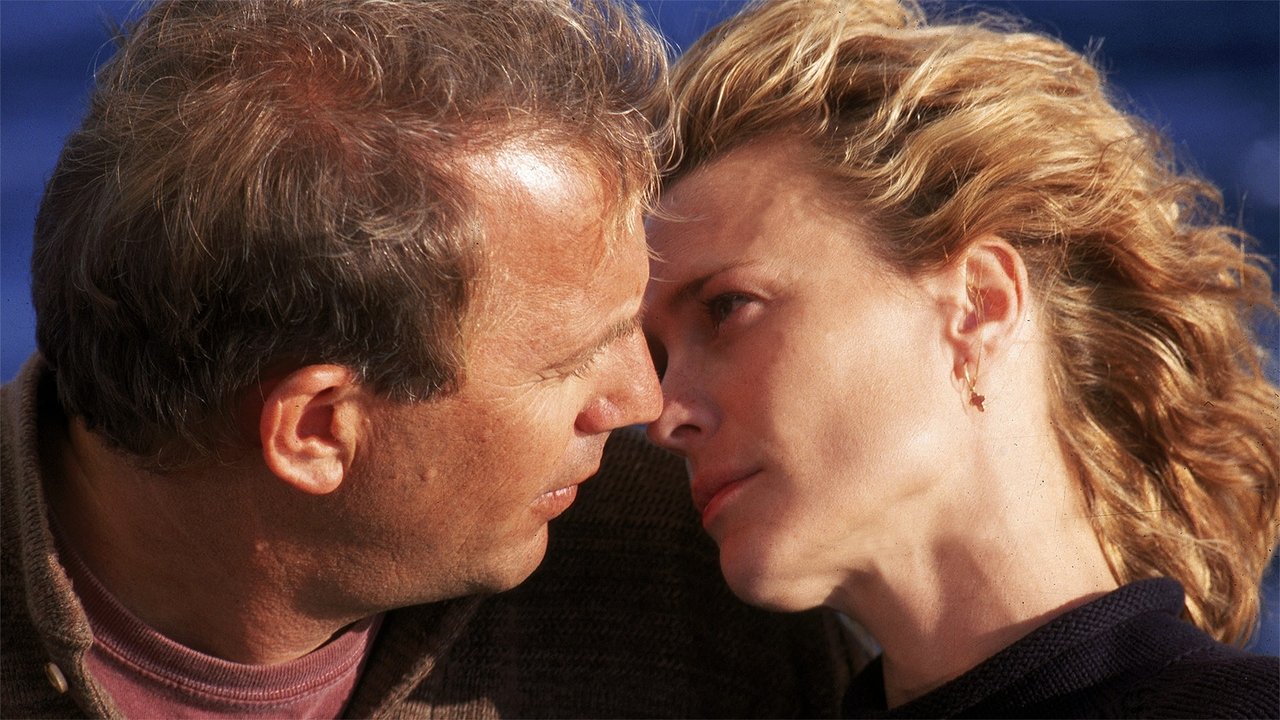
Naturally, Theresa and Garret connect. The film hinges on the chemistry between Wright and Costner, and for the most part, it smolders effectively. There's an attraction born less from witty banter and more from a shared sense of melancholy and a tentative reaching for something more. Wright portrays Theresa's dilemma – her growing feelings versus the secret of how she found him – with compelling vulnerability. You feel her internal conflict, the risk she's taking by getting closer. Costner’s Garret slowly, cautiously lets her in, thawing degrees by painful degrees. Their scenes together, often set against the stunning, sometimes starkly beautiful coastal landscapes captured by cinematographer Caleb Deschanel, have a measured pace. Mandoki, who previously explored complex relationships in When a Man Loves a Woman (1994), lets the emotional undercurrents build, sometimes relying perhaps a bit too heavily on longing gazes and swelling music.
An Anchor Named Newman
Let’s be honest, though: one of the film's brightest lights is the legendary Paul Newman as Dodge Blake, Garret's crusty, plain-speaking father. In one of his later roles, Newman doesn't just steal scenes; he elevates them with effortless grace and wry humor. His relationship with Garret provides the film's most grounded moments. Dodge sees through Garret’s self-imposed isolation, offering gruff wisdom and unwavering paternal love. He also sees Theresa clearly, recognizing both the hope and the complication she represents. Every moment Newman is on screen feels like a gift, a reminder of what true screen presence looks like. His performance adds a necessary ballast to the sometimes-drifting sentimentality of the central romance. It's reported that Newman thoroughly enjoyed working on location in Maine (standing in for the Outer Banks in some scenes), bringing his signature warmth both on and off camera.
Weathering the Sentimental Storm
Now, revisiting Message in a Bottle on a fuzzy VHS tape (or, let's be real, maybe a DVD or stream nowadays) requires a certain frame of mind. Does it occasionally veer into melodrama? Absolutely. Are some plot points predictable, especially if you're familiar with the Sparksian template? Yes. The film walks a fine line between genuine emotion and outright manipulation of the heartstrings. Its significant budget (around $80 million back then, a hefty sum for a drama) is evident in the polished visuals and star power, contributing to its decent box office haul (nearly $119 million worldwide), even if critical reception was decidedly mixed. Yet, there's an earnestness here that's hard to completely dismiss. It tries to grapple with profound themes – the enduring power of love after loss, the courage required for second chances, the way fate and choice intertwine. Does it fully succeed? Maybe not entirely, but the effort, particularly buoyed by the committed performances, feels sincere.
The Lingering Echo
Message in a Bottle isn't a perfect film. It embraces sentimentality with open arms and follows a path many viewers will anticipate. But there's something in its core premise – the almost mystical idea of a message sent out into the vast indifference of the ocean finding its intended (or perhaps fated) recipient – that retains a certain power. It speaks to a universal human longing for connection, for understanding, for proof that our deepest feelings matter enough to traverse impossible distances. The strong performances, especially from Wright and the luminous Newman, anchor the emotional journey. It’s a film that wears its heart on its sleeve, sometimes awkwardly, but always sincerely.

Rating: 6/10
Justification: While the film benefits immensely from its star power (especially Paul Newman's grounding presence) and captures a genuinely poignant central idea, its emotional journey sometimes feels overly calculated and predictable, dipping into melodrama characteristic of its Nicholas Sparks source material. Robin Wright and Kevin Costner generate believable chemistry, but the script doesn't always give them the nuanced material they deserve. It's visually appealing and earnest, hitting some resonant notes about grief and second chances, but ultimately feels somewhat hampered by its adherence to romantic drama conventions of the era. A solid, if slightly waterlogged, piece of late-90s romanticism.
Final Thought: It leaves you pondering not just the likelihood of finding a message in a bottle, but the chances we take – or fail to take – when love offers a fragile lifeline across the seemingly vast oceans of loss.