Here we are, back in the glow of the cathode ray tube, figuratively speaking. Today, though, we're pulling something off the shelf that feels a bit different from our usual fare of high-octane action or creature features. It’s a title that might have seemed almost out of place in the video store aisle back in '99, nestled perhaps between flashier covers. I'm talking about Aleksandr Petrov's animated adaptation of Ernest Hemingway's towering novella, The Old Man and the Sea (1999). And let me tell you, watching it again isn't just nostalgia; it's experiencing a piece of pure, moving art that happened to grace our screens near the turn of the millennium.
A Canvas Come to Life
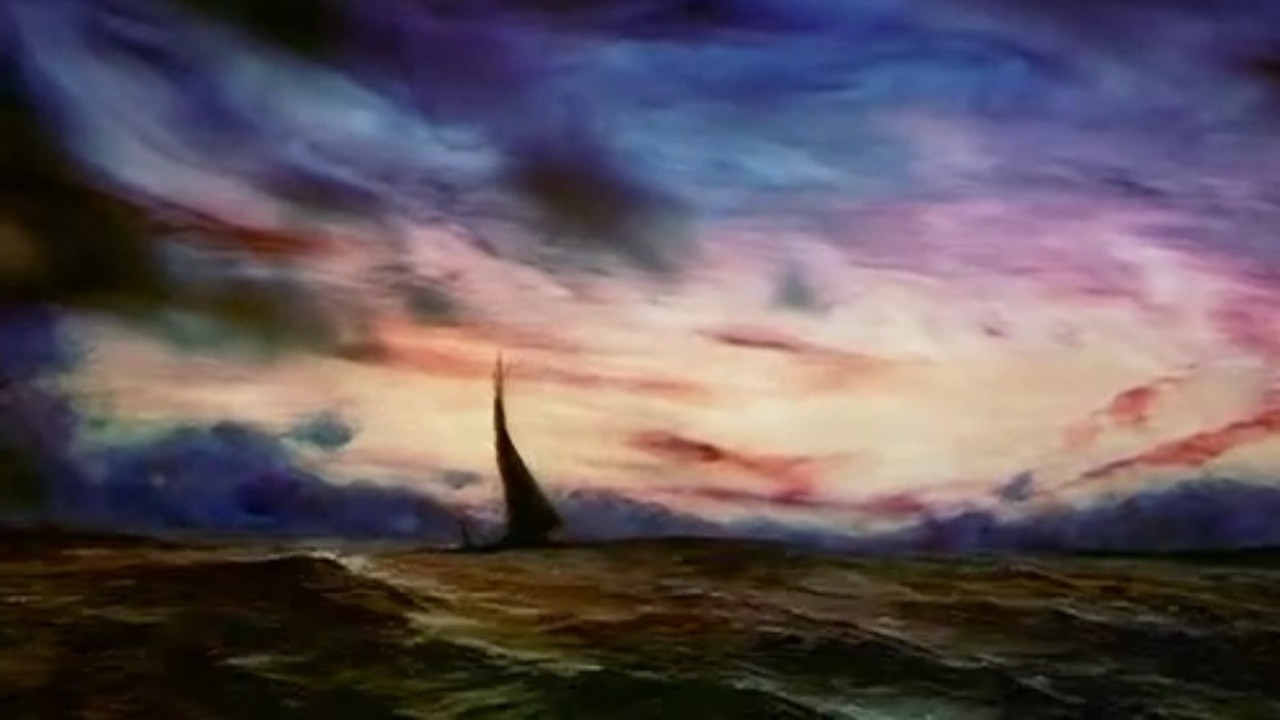
What strikes you first, and what lingers long after the brief 20-minute runtime, isn't just the story – familiar as it is to many – but the astonishing visual language. Forget traditional cel animation or the burgeoning CGI of the late 90s. Russian animator Aleksandr Petrov, who both directed and adapted the screenplay, employed a technique so laborious, so unique, it feels almost like a dream rendered tangible: pastel oil paintings on glass. Each frame, painstakingly crafted and photographed, flows into the next, creating a living, breathing Impressionist painting. Imagine Monet deciding to animate Water Lilies, and you're only partway there. The texture of the paint, the visible brushstrokes, the way light plays across the surfaces – it imbues the sea, the sky, and Santiago himself with an organic, vibrant quality that traditional animation rarely achieves. This wasn't just animation; it was fine art set in motion.
Beyond the Technique: Capturing Hemingway's Soul

But is it just a technical marvel? Absolutely not. Petrov's approach is perfectly attuned to Hemingway's sparse, profound prose. The story, for those who haven't revisited it since school, is deceptively simple: Santiago, an aging Cuban fisherman, endures an epic struggle with a giant marlin far out in the Gulf Stream, only to lose his prize catch to sharks on the journey home. It’s a tale of perseverance, dignity in the face of defeat, and the complex, often brutal relationship between humanity and the natural world.
Petrov’s animation doesn’t just illustrate these themes; it embodies them. The fluidity of the paint mirrors the constant motion of the sea, vast and indifferent. When Santiago battles the marlin, the colours become urgent, the strokes more agitated, capturing the raw physicality and emotional intensity of the struggle. We see Santiago's dreams of lions on African beaches rendered in warmer, softer hues, a poignant contrast to the harsh blues and greens of his reality. The lack of extensive dialogue – much of the story is carried by subtle narration and the sheer power of the visuals – forces us to engage directly with Santiago's inner world, his quiet determination etched onto his animated face as much as it’s conveyed through the sparse voiceover.
A Labour of Love on Glass
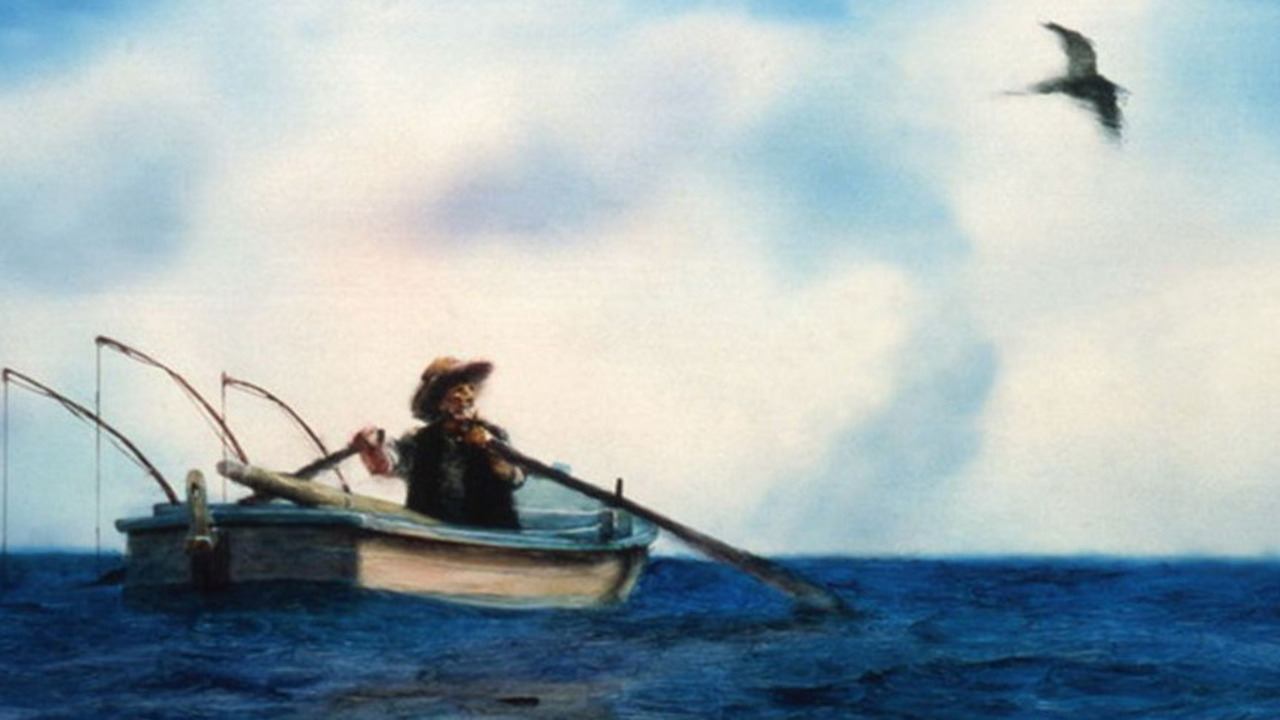

Thinking back to the late 90s, a period pushing towards digital dominance, the very existence of this film feels like an act of defiance, much like Santiago's own fishing trip. It's worth remembering the sheer effort involved. Petrov worked with his son, Dmitri, painting on different layers of glass to achieve depth, modifying the paintings for each frame of film. This process reportedly took over two years to complete. It's a dedication to craft that feels almost mythical now. This commitment didn't go unnoticed; the film famously won the Academy Award for Best Animated Short Film in 2000. It was also the first animated film ever released in the large-screen IMAX format, and seeing those painterly visuals expanded to that scale must have been breathtaking – a far cry from the standard-definition television most of us likely experienced it on initially. Can you imagine the impact of those brushstrokes on a screen metres high?
The Weight of the Sea, The Weight of Years
Watching The Old Man and the Sea today, it feels timeless. Unlike some films from the era that show their age through dated effects or cultural references, Petrov's artistry remains undiminished. The themes resonate just as powerfully. Santiago's struggle isn't just about catching a fish; it's about confronting mortality, finding meaning in effort rather than just outcome, and maintaining grace under pressure. Doesn't that echo challenges we all face, regardless of the era? His quiet pride, his respect for his adversary the marlin, his weariness and resilience – it’s all conveyed with a depth that belies the animated form. It reminds us that animation isn't merely a genre for children, but a medium capable of profound artistic expression.
This film might not have been the tape you rented for a Friday night pizza party. It demands a different kind of attention – quieter, more contemplative. But finding it, perhaps unexpectedly, felt like discovering something precious. It’s a reminder of the artistry that could exist even within the commercial constraints of filmmaking, a testament to the power of a singular vision.
***

Rating: 9/10
Justification: This score reflects the sheer artistic achievement of the paint-on-glass animation, a breathtaking and unique visual style perfectly suited to the source material. Petrov's direction masterfully captures the essence of Hemingway's themes – endurance, dignity, humanity's place in nature – with emotional depth and visual poetry. The Oscar win and its pioneering IMAX release highlight its significance. It loses a single point only because its short runtime and meditative pace might not appeal universally, but as a piece of cinematic art, it's nearly flawless.
Final Thought: More than just an adaptation, Petrov's The Old Man and the Sea is a translation of literary feeling into visual poetry, a shimmering, hand-painted jewel that reminds us of the profound beauty animation can achieve. What image from it stays with you the most?