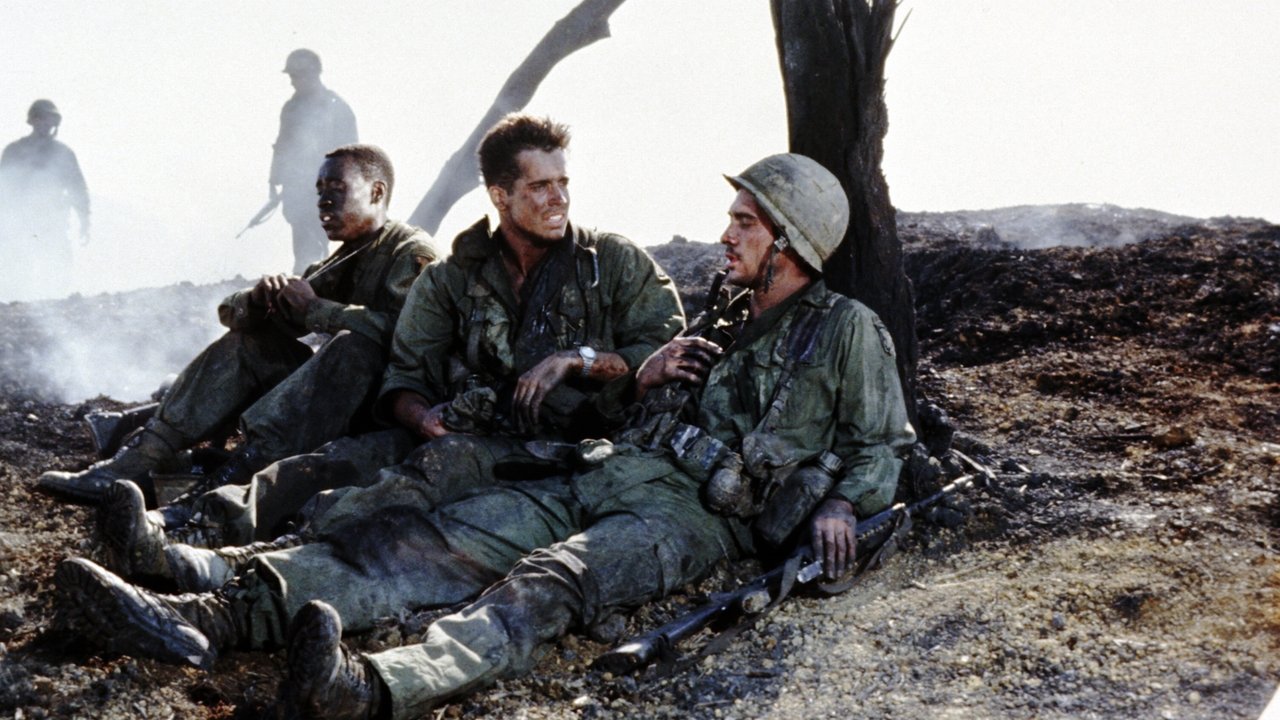
It starts with the mud. Thick, cloying, inescapable. Watching John Irvin's Hamburger Hill (1987) again after all these years, it’s the omnipresent red earth, churned into a slurry by monsoon rains and mortar fire, that sticks in the mind. It clings to the uniforms, slicks the impossibly steep slopes of Hill 937 in the A Shau Valley, and seems to physically represent the grinding, demoralizing reality faced by the men of the 101st Airborne Division. This wasn't a film about the politics back home or grand strategies; it was about the inches gained and lost on a single, brutal piece of land.
Ground Level Grit
Released in the slipstream of Oliver Stone's Oscar-winning Platoon (1986) and arriving the same year as Stanley Kubrick's stylized Full Metal Jacket, Hamburger Hill often felt like the overlooked sibling in the late-80s Vietnam War movie surge. Yet, its power lies precisely in its focused, almost documentary-like approach. Director John Irvin, who had already proven his knack for gritty realism with The Dogs of War (1980), partnered with screenwriter James Carabatsos, himself a Vietnam veteran. This crucial background informs every frame. Carabatsos wasn't interested in crafting a neat narrative arc; he wanted to convey the lived experience of the infantryman – the exhaustion, the fear, the sudden bursts of violence, and the gnawing question hanging over the entire operation: Why this hill? There's a rawness here, an avoidance of overt Hollywood sentimentality that feels startlingly authentic, even today.
A Band of Unknown Brothers
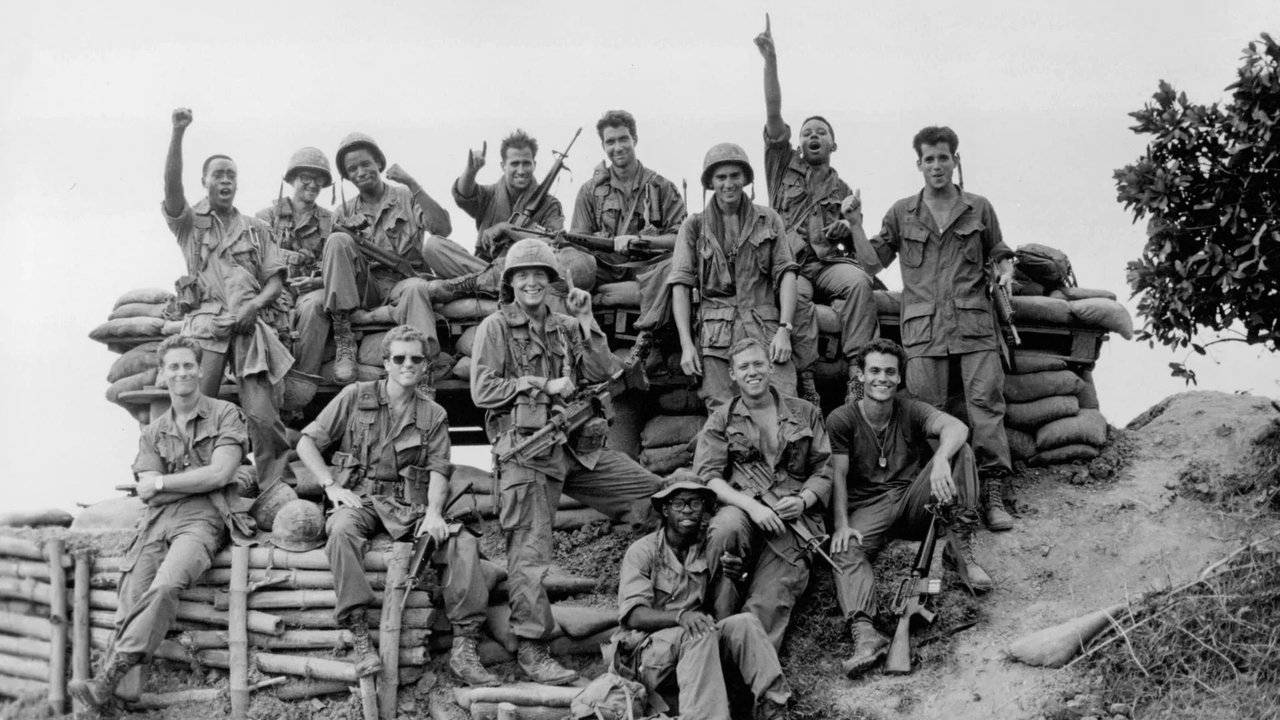
Crucial to this authenticity is the ensemble cast, largely composed of young actors who weren't yet household names. We see early, powerful turns from Dylan McDermott as the battle-tested Sgt. Frantz, trying to hold his increasingly fragmented squad together; Steven Weber as the weary Worcester, grappling with the absurdity of their situation; and a standout Courtney B. Vance as Spc. Abraham 'Doc' Johnson, the medic whose calm professionalism belies the horrors he witnesses daily. Other faces, like Don Cheadle and Michael Boatman, add to the feeling of a real unit. Their relative anonymity back in '87 prevents the audience from latching onto a single star persona. Instead, we see them as they are: scared kids, barely men, thrust into unimaginable circumstances. Their performances feel less like acting and more like reacting – to the chaos, the loss, and the sheer physical misery.
The production itself mirrored the film's intensity. Shot primarily in the Philippines under challenging conditions meant to replicate Vietnam, the actors underwent a rigorous two-week boot camp led by Vietnam veterans. This shared ordeal reportedly forged a genuine bond among the cast, translating into palpable on-screen camaraderie amidst the harrowing battle scenes. You feel the weight of their gear, the sting of the rain, the concussive force of the explosions.
The Relentless Ascent
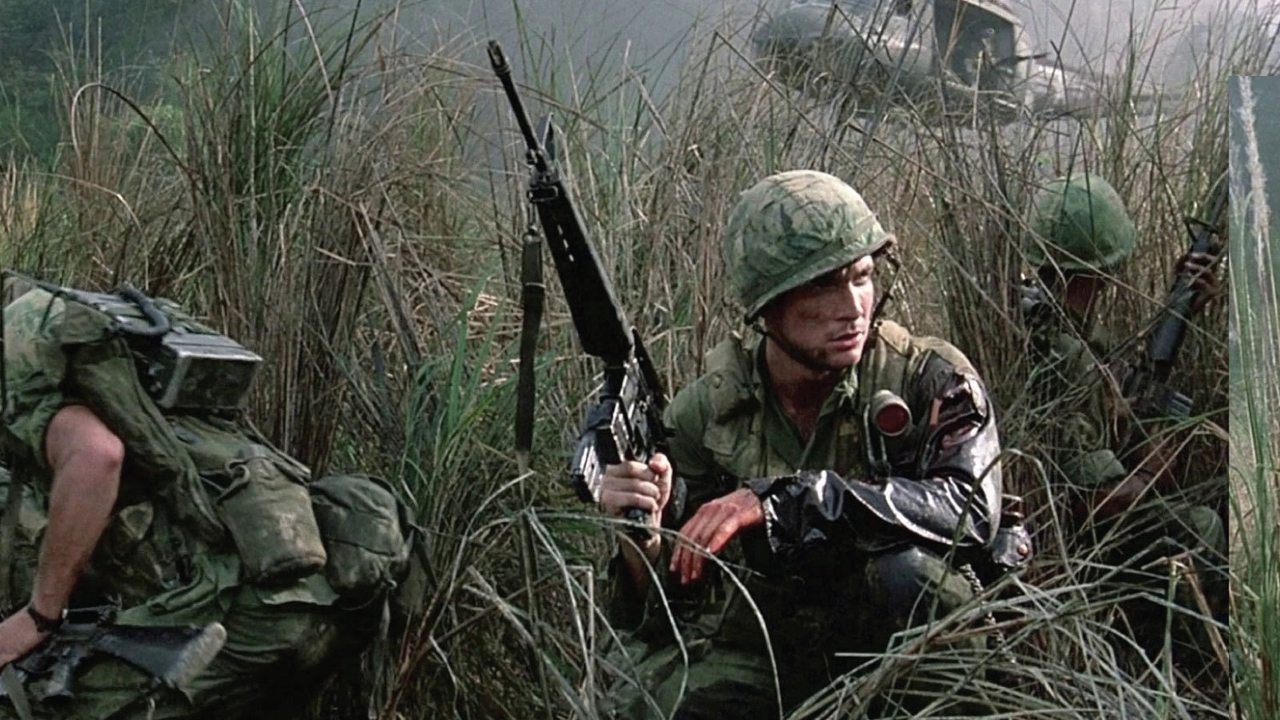
The film's structure mirrors the actual 10-day battle for Hill 937: a series of brutal, seemingly futile assaults up the heavily fortified slopes. Irvin masterfully captures the repetitive nightmare of the fighting. There are no stylish slow-motion deaths or heroic last stands scored to pop music. Instead, combat is depicted as confusing, terrifyingly sudden, and often tragically arbitrary. The camera stays close, often at ground level, emphasizing the soldiers' vulnerability and the claustrophobia of the jungle terrain. The practical effects, while perhaps showing their age slightly compared to modern CGI, possess a visceral, tangible quality that underscores the physical toll of the battle. Remember how real those squib hits and dirt-churning explosions felt on a CRT screen back in the day?
Why This Hill?
Beyond the visceral depiction of combat, Hamburger Hill subtly explores the soldiers' internal struggles. Racial tensions simmer within the unit, reflecting the societal divisions back home, yet ultimately giving way to the shared experience of survival. We glimpse their attempts to connect with a world far removed – through letters filled with longing or black humor. The film doesn't offer easy answers about the Vietnam War's purpose or morality. Instead, it focuses relentlessly on the soldiers' perspective, questioning the strategic value of taking this particular hill at such a devastating cost – a sentiment echoed by soldiers and politicians at the time, leading to the battle's controversial name. One fascinating tidbit: Carabatsos specifically resisted studio pressure to include scenes focusing on the anti-war movement back home, determined to keep the lens tightly focused on the soldiers' direct experience on the ground. This unwavering focus is the film's greatest strength.
Its relatively modest budget (reportedly around $9 million) meant Irvin had to rely on grit and realism rather than spectacle, which ultimately serves the story better. While it didn't achieve the box office heights or awards recognition of Platoon, Hamburger Hill earned deep respect, particularly from veterans who recognized its unflinching honesty. Its marketing tagline, "They arrived as strangers. They fought as brothers. They died as heroes," captures the arc of camaraderie forged in fire, even if the "hero" label feels complicated by the film's inherent critique of the mission's value.
The Lingering Echo
Rewatching Hamburger Hill isn't necessarily a "fun" experience in the way some 80s action flicks are. It’s a tough, somber film that demands attention and leaves you contemplating the human cost of conflict long after the credits roll. It doesn't flinch, and it doesn't offer easy comfort. What lingers most is that sense of shared endurance against impossible odds, the faces etched with exhaustion and fear, and the haunting image of that muddy, blood-soaked hill. It stands as a powerful, unvarnished tribute to the soldiers who fought there, asking us to remember not just the battle, but the humanity caught within it. Does its brutal honesty resonate even more powerfully now, in a world still grappling with the purpose and consequence of military engagement?
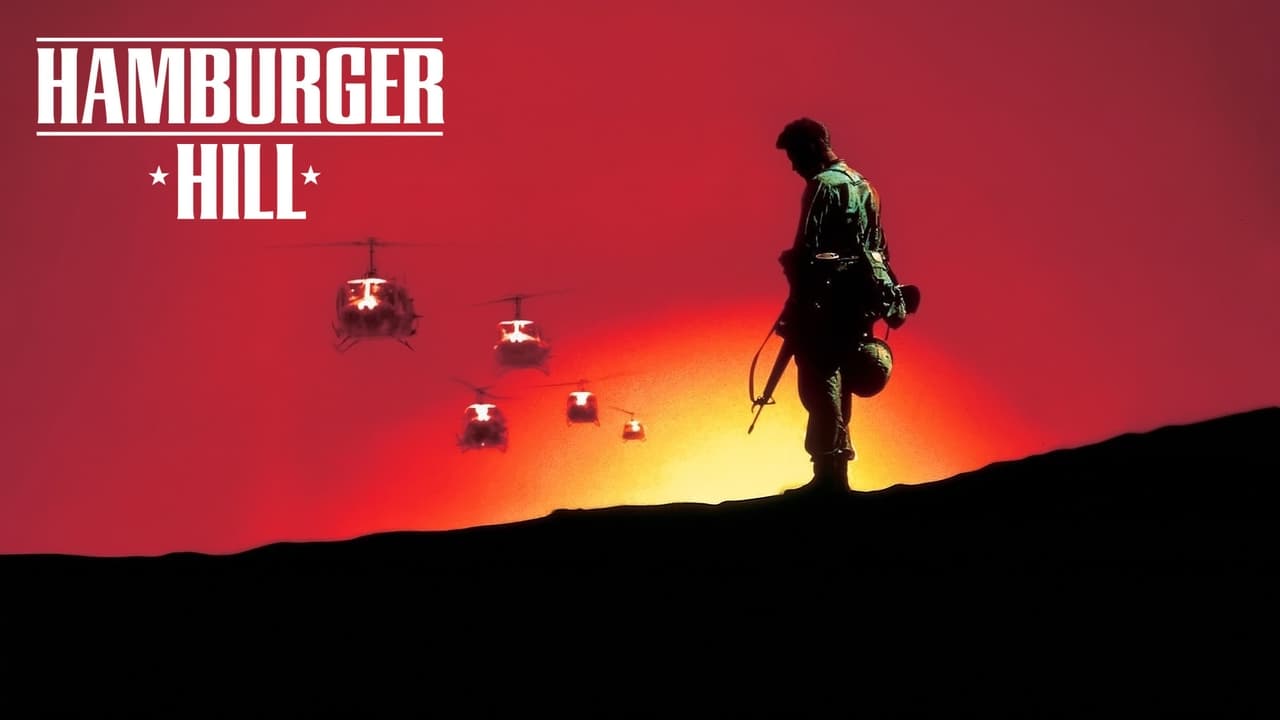
Rating: 8.5/10
This score reflects the film's unwavering commitment to realism, its powerful ensemble performances, and its refusal to compromise its grim vision. It might lack the stylistic flourishes or broader scope of its contemporaries, but its focused intensity and authentic portrayal of the soldiers' experience make it a vital and deeply affecting piece of filmmaking from the era. It’s a harrowing journey, but one that feels necessary.
Hamburger Hill remains a potent reminder of the grunt's-eye view of war, a film less concerned with glory than with survival, solidarity, and the mud between your toes.