What whispers lie beneath the dialogue? What glances hold unspoken meanings? Long before the internet offered instant analysis, watching older films often involved a kind of subconscious detective work, sensing currents running beneath the surface narrative. Sometimes these were subtle, perhaps unintentional; other times, they felt deliberately placed yet maddeningly oblique. It's this world of coded messages, forced compromises, and outright cinematic lies regarding queer identity that Rob Epstein and Jeffrey Friedman’s essential 1996 documentary, The Celluloid Closet, dives into with profound insight and quiet power. Narrated with gentle authority by Lily Tomlin, it’s less a polemic and more a deeply affecting historical reflection, inviting us to look again at the movies we grew up with, but through a crucial, often obscured lens.
Hollywood's Hidden Story
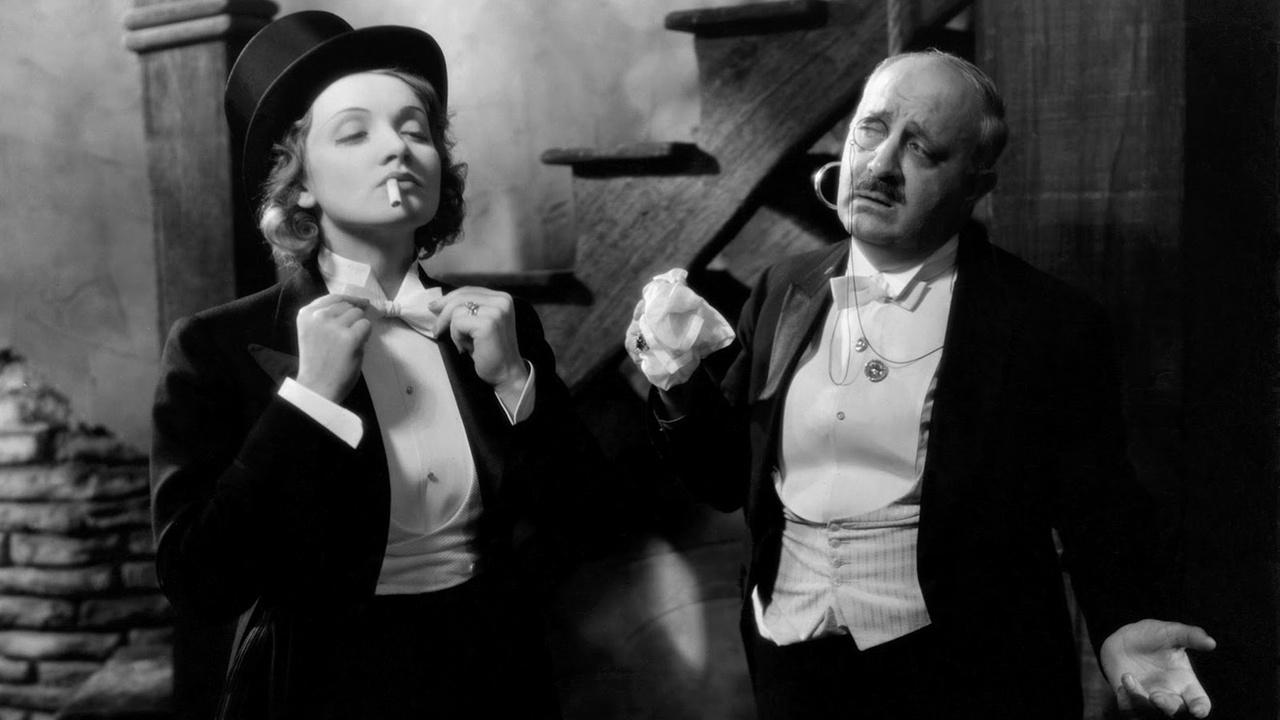
Based on the groundbreaking 1981 book by historian and activist Vito Russo, the film meticulously charts the often painful, sometimes darkly funny, and frequently tragic trajectory of gay and lesbian characters in mainstream American cinema. From the early days where effeminate 'sissy' characters provided comic relief (while being firmly desexualized), through the era of the Hays Code where any overt mention was forbidden, leading to characters coded as dangerously predatory or doomed to suicide, the documentary lays bare a history shaped by fear, censorship, and societal prejudice. It’s a sobering reminder of how powerfully film reflected, and sometimes reinforced, prevailing attitudes. Russo, who sadly passed away from AIDS-related complications in 1990, worked tirelessly for years to see his work adapted, and the resulting film stands as a testament to his passion and rigorous research. It feels like the culmination of a necessary conversation he desperately wanted the world to have.
Voices from the Inside

What elevates The Celluloid Closet beyond mere historical survey is its incredible roster of interviewees – writers, actors, and filmmakers sharing firsthand accounts and candid reflections. Hearing Tony Curtis discuss the playful homoeroticism consciously layered into scenes with Jack Lemmon in Billy Wilder's Some Like It Hot (1959) is illuminating. Listening to novelist and screenwriter Gore Vidal dissect the subtle undercurrents he deliberately wrote into Ben-Hur (1959), unbeknownst to Charlton Heston, provides a fascinating glimpse into authorial intent battling studio constraints. Perhaps most poignantly, Farley Granger speaks with remarkable openness about his role in Alfred Hitchcock's Rope (1948) and Shirley MacLaine reflects on the Hays Code-mandated changes that softened the lesbian relationship in William Wyler's The Children's Hour (1961). These aren't just talking heads; they are witnesses, participants, and sometimes even resistors, their memories adding invaluable texture and emotional weight to the film clips being analyzed. The inclusion of modern commentators like writer Susie Bright and playwright Harvey Fierstein also bridges the historical context to more contemporary sensibilities, highlighting how far things had come by the mid-90s, and implicitly, how far there still was to go.
Crafting the Argument
Epstein and Friedman, already acclaimed for The Times of Harvey Milk (1984), demonstrate a masterful command of the documentary form. They seamlessly weave together an astonishing array of film clips – spanning decades and genres – with the interview segments and Lily Tomlin's narration. The editing is key; juxtapositions are often employed to powerful effect, highlighting recurring stereotypes (the tragic gay character, the villainous lesbian) or contrasting coded scenes with the frank commentary of those involved. There's a particular power in seeing these fragments, often brief moments or suggestive lines from films many of us watched casually on television or rented on VHS, suddenly reframed and charged with new, often unsettling, meaning. The filmmakers understand that the evidence lies within the films themselves, and they present it compellingly, allowing the images and the voices to build their case organically.
Unpacking the Code
One of the film's most significant contributions is its detailed exploration of the Production Code (Hays Code), enforced from the mid-1930s well into the 1960s. It explicitly forbade positive or overt depictions of "sex perversion," forcing filmmakers into a realm of implication and stereotype. The Celluloid Closet shows precisely how this worked – the subtle gesture, the loaded line of dialogue, the casting choice that signaled 'otherness' without ever naming it. It reveals a fascinating, if often frustrating, shadow history of Hollywood creativity working around censorship. This context is crucial; it explains why so many queer characters in classic cinema met unhappy ends or were portrayed as threats – it was often the only way they were allowed to exist on screen at all. The film itself faced its own hurdles; securing funding for a feature documentary on this subject wasn't easy in the early 90s, highlighting the lingering sensitivity around the topic even then.
Why It Still Matters
Watching The Celluloid Closet today, nearly three decades after its release, remains a potent experience. It prompts a fundamental re-evaluation of film history. How many beloved classics carry hidden narratives we never consciously registered? How did these subtle (and not-so-subtle) depictions shape viewers' understanding, or misunderstanding, of queer lives? The film doesn’t just document the past; it equips viewers with a critical lens to apply to all media. While representation has undoubtedly evolved, the echoes of coding, stereotyping, and the pressures of mainstream acceptance still resonate. What lingering questions does it leave us with about visibility versus authentic portrayal? It serves as a vital reminder that seeing oneself on screen matters profoundly, and the way one is seen matters even more.
Rating: 9/10
The Celluloid Closet earns a 9 out of 10 for its exceptional blend of meticulous research, invaluable firsthand accounts, and skillful filmmaking. It transforms Vito Russo's essential text into a compelling, accessible, and deeply moving documentary experience. Its strength lies in its clarity, its emotional resonance derived from the candid interviews, and its powerful use of film clips as primary evidence. It avoids didacticism, instead fostering reflection and critical thinking. While its focus leans more heavily on the experiences of gay men compared to lesbians (a reflection, perhaps, of both Russo's original work and historical Hollywood biases), it remains an indispensable piece of film scholarship and social history, executed with intelligence and sensitivity.
It's more than just a documentary; it's a key, unlocking hidden rooms within the house of cinema we thought we knew so well, revealing the ghosts in the machine and the coded conversations that shaped decades of filmmaking.