Okay, let's settle back into that familiar armchair, the one perfectly worn in from countless movie nights. Remember those oversized clamshell cases? Sometimes, just holding one felt like an event. Today, we're pulling a unique tape off the shelf, one that aimed to bring the roof of the world into our living rooms: the 1998 IMAX documentary, Everest.
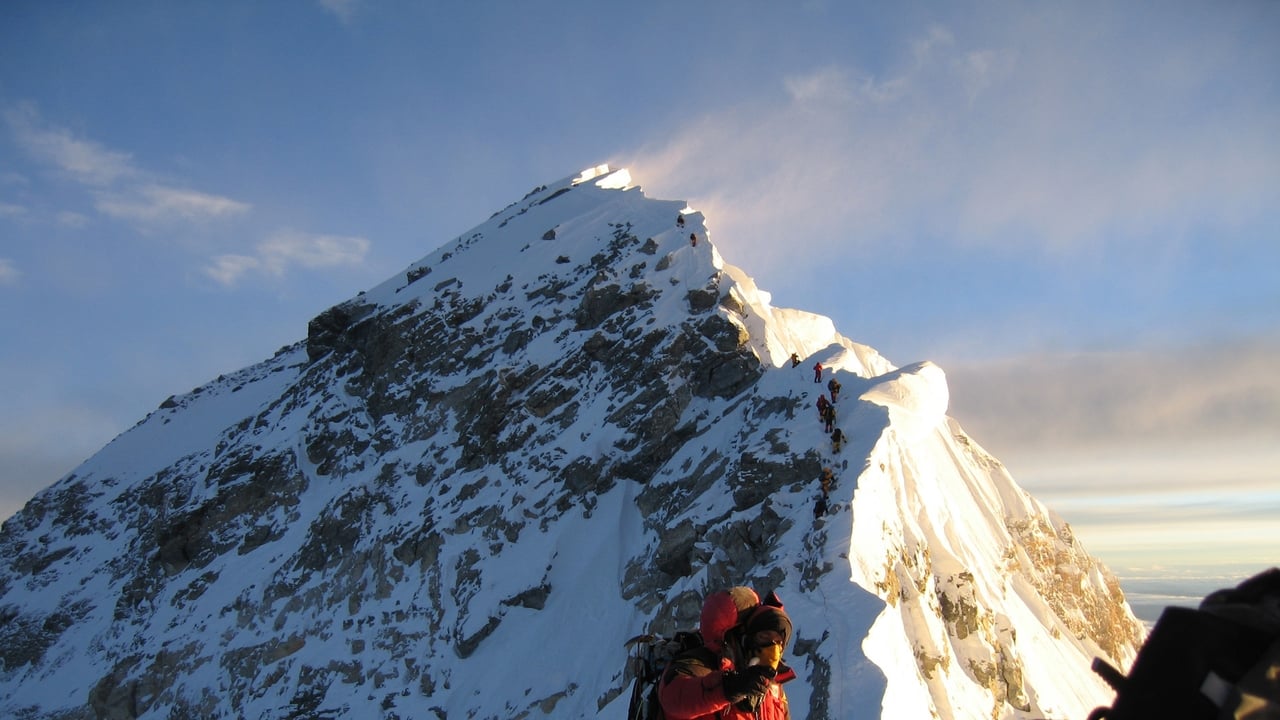
It’s a strange thing, isn't it, trying to capture the sheer, overwhelming scale of Mount Everest? Especially when considering most of us first encountered this particular chronicle not on a towering IMAX screen, but shrunk down to the fuzzy confines of a CRT television via a trusty VHS tape. Yet, even diminished, something of the mountain’s terrifying majesty bled through. The film arrives with a weight beyond its subject matter, filmed as it was during the infamous and tragic climbing season of May 1996.
Scaling the Unscalable Format
The first thing that strikes you, even now, is the audacity of the project. Hauling IMAX cameras – notoriously cumbersome beasts, weighing around 80 pounds before adding film and batteries – up to the treacherous altitudes of the Khumbu Icefall and beyond? It beggars belief. Led by climber and filmmaker David Breashears, the expedition team, including fellow directors Stephen Judson and Greg MacGillivray, wasn't just documenting a climb; they were undertaking an extreme logistical and physical challenge within another extreme challenge. You can almost feel the thin air and back-breaking effort just watching them maneuver the equipment. This wasn't just pointing a camera; it was a monumental feat of engineering and endurance before they even captured a single frame of the summit. Breashears, already an experienced Everest climber and filmmaker (he’d co-directed a previous Everest film, Flags Over Everest, in 1991), knew the risks intimately, adding a layer of palpable tension to the crew's own journey.
The Human Face of the Mountain
While the mountain is undeniably the star, the documentary wisely anchors itself in the human stories playing out on its slopes. We follow a team led by veteran climber Ed Viesturs (on his way to summiting all 14 of the world's 8,000-meter peaks without supplemental oxygen – a truly staggering achievement) and featuring Jamling Tenzing Norgay, son of the legendary Sherpa Tenzing Norgay who first reached the summit with Sir Edmund Hillary in 1953. There’s a quiet dignity in Jamling’s quest to understand his father’s legacy, framed against the deep spirituality the Sherpa people invest in Chomolungma, the "Mother Goddess of the World." We also meet Araceli Segarra, a Spanish climber whose infectious energy provides warmth amidst the ice, later becoming the first Spanish woman to summit Everest. The film portrays their determination, their fears, and the profound respect they hold for the mountain, largely avoiding manufactured drama. The calm, measured narration by Liam Neeson, relatively early in his run as Hollywood's go-to voice of authority and gravitas, perfectly complements the visuals, adding solemnity without overwhelming the climbers' own experiences.
Amidst Beauty, Tragedy
Of course, you cannot discuss this film without acknowledging the shadow of the 1996 disaster that looms over it. The IMAX team found themselves unexpectedly caught up in one of mountaineering's darkest chapters when a rogue storm descended on summit day, ultimately claiming eight lives, including those of experienced guides Rob Hall and Scott Fischer. The documentary handles this with sensitivity. The filmmakers, including Breashears and Viesturs, curtailed their own summit push to assist the stricken climbers, providing crucial support and oxygen to survivors like Beck Weathers. Everest doesn't sensationalize the tragedy; instead, it presents it as a sobering testament to the mountain's deadly power and the razor-thin margin between triumph and disaster. It offers a different, perhaps more visually immediate, perspective than Jon Krakauer's bestselling account Into Thin Air, which chronicles the same events from within one of the affected commercial expeditions. Seeing the very conditions, the very landscape where those events unfolded, adds a chilling resonance. One particularly poignant behind-the-scenes detail is that the film crew donated significant amounts of their resources, including vital oxygen supplies meant for their own summit bid, to aid the rescue efforts, embodying the mountain code even at great personal cost to their project.
From IMAX Giant to VHS Memory
Did watching Everest on VHS capture the full, vertigo-inducing scope intended for the six-story IMAX screen? Honestly, no. That immersive scale is inevitably lost. I recall renting this, slotting it into the VCR, and while impressed, feeling like I was peering through a keyhole at something vast and unknowable. Yet, the core strengths remained: the compelling human narratives, the stark beauty of the landscape, the undeniable drama (both intended and tragically unforeseen), and the sheer wonder of seeing the top of the world, even if pixelated and contained. The film still managed to convey the immense risks and the profound allure that draws people to such dangerous places. It became a huge hit, grossing over $128 million worldwide against its approximately $6 million budget, making it the highest-grossing documentary film up to that point – a testament to its power, even beyond the giant screen format.
The Verdict
Everest (1998) remains a landmark documentary. It’s a technical marvel, a respectful tribute to the fallen, and a powerful portrait of human ambition tested against the indifference of nature. While the home video experience inevitably compromises the intended visual impact, the core story, the stunning photography (even scaled down), and the profound sense of place endure. It captured a specific, harrowing moment in mountaineering history with immediacy and dignity.
Rating: 8/10 - The rating reflects its power as a documentary and historical artifact, acknowledging the technical achievement and sensitive handling of tragedy, slightly tempered by the inherent limitations of viewing an IMAX spectacle on home video formats of the era, yet still recognizing its immense impact and quality.
It leaves you contemplating that thin, cold air, doesn't it? Wondering about that primal urge to stand on the highest point on Earth, even knowing the terrible cost it can exact.