Okay, let's slide this tape into the VCR... or perhaps, more accurately for this one, recall spotting its distinctive cover on the 'New Releases' shelf just as DVDs were truly starting to take over.
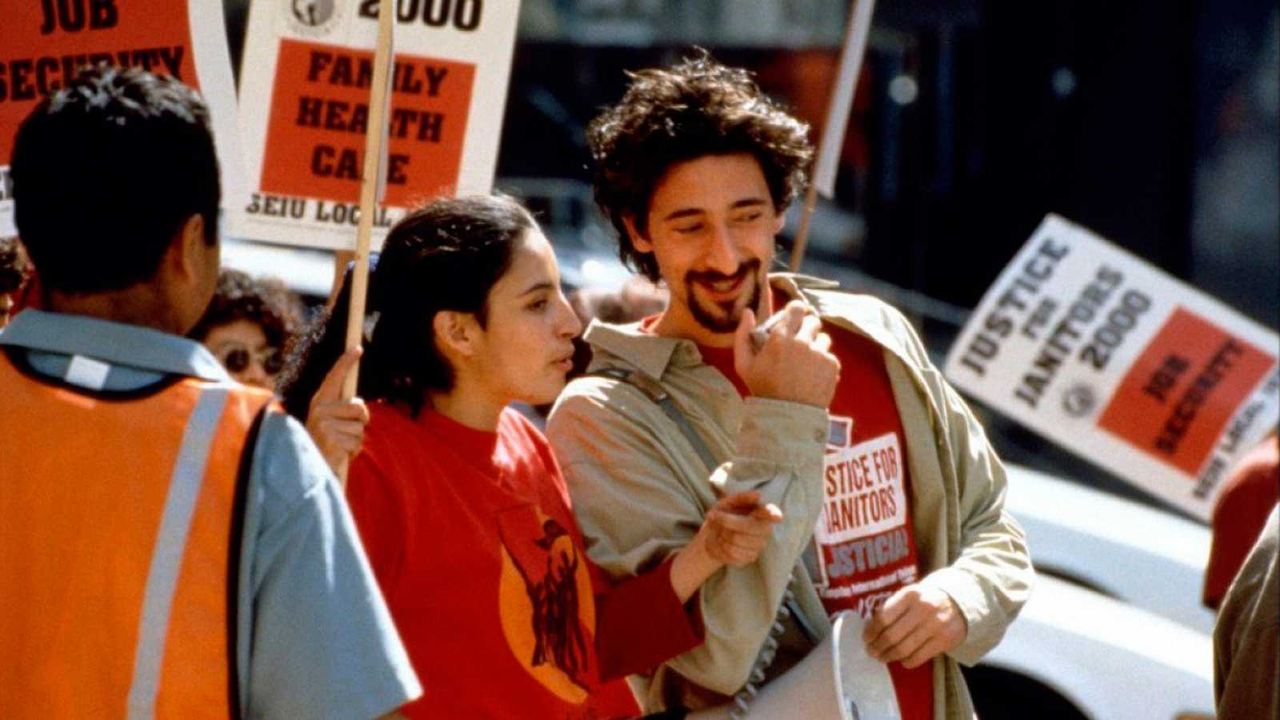
As the year 2000 dawned, bringing with it anxieties both digital and societal, the unflinching gaze of British director Ken Loach turned towards the hidden corners of the American Dream – specifically, the lives of immigrant janitorial staff cleaning the gleaming office towers of Los Angeles. Bread and Roses, penned by Loach's frequent collaborator Paul Laverty (whose background as a human rights lawyer often deeply informs their work), isn't a comfortable watch. It wasn't then, and it isn't now. But its power lies precisely in that discomfort, forcing us to confront the often-invisible labour that props up our daily lives. It carries the fiery spirit of social realism that felt so vital in independent cinema throughout the 80s and 90s, making it a crucial watch, even if it technically arrived at the turn of the millennium.
The Price of Dignity
The film drops us directly into the precarious world of Maya (a truly captivating Pilar Padilla in her debut film role), who has illegally crossed the border from Mexico to join her sister Rosa (Elpidia Carrillo, unforgettable from Predator (1987)) in L.A. Work is scarce, exploitative, and poorly paid. Maya eventually lands a non-union janitorial job in a downtown skyscraper, a place where the disparity between the unseen cleaners and the oblivious office workers couldn't be starker. It’s here she encounters Sam (Adrien Brody, radiating restless energy years before his Oscar win for The Pianist (2002)), a passionate, slightly reckless organiser for the "Justice for Janitors" campaign – a real-life movement that fought for better wages and conditions for service workers in L.A.
What unfolds isn't a simple tale of triumph. Loach and Laverty are far too honest for that. It's a messy, often heartbreaking look at the immense personal cost of fighting for basic rights. We see the fear, the divisions within the immigrant community itself (stoked by management), the strain on family ties as Rosa, pragmatic and burdened by responsibility, clashes with Maya's growing idealism fueled by Sam's infectious, if sometimes naive, fervor.
Loach's Unvarnished Lens
Ken Loach, a master filmmaker known for works like Kes (1969) and My Name is Joe (1998), brings his signature cinéma vérité style to bear. There’s little cinematic gloss here. The lighting feels naturalistic, often harsh; the dialogue crackles with authenticity, likely honed through Loach's famous methods of improvisation and providing actors with scenes only shortly before filming to capture genuine reactions. This approach grounds the film intensely. You feel the exhaustion in the workers' bodies, the grime under their fingernails, the gnawing anxiety of potential deportation. Interestingly, Loach often blends professional actors with non-professionals or individuals with direct experience of the subject matter to enhance this realism – a technique that feels particularly potent here, blurring the line between performance and lived experience.
The film was inspired directly by the actual Justice for Janitors campaign in Los Angeles during the 1990s, a struggle that involved strikes, protests, and significant pushback from building owners and cleaning contractors. Laverty reportedly spent considerable time researching and interviewing workers, and that dedication shows in the script's nuanced portrayal of the characters' motivations and fears. It avoids easy heroes and villains, presenting flawed human beings caught in a system designed to exploit them.
Performances That Resonate
While Adrien Brody brings a necessary spark as the galvanizing organiser Sam, the film truly belongs to Pilar Padilla and Elpidia Carrillo. Padilla embodies Maya's journey from cautious newcomer to committed activist with incredible heart and vulnerability. We see the fire ignite within her, but also the profound risks she takes. Carrillo, as Rosa, delivers a performance layered with weary pragmatism and deep familial love, representing the difficult choices faced by those just trying to survive day-to-day. Their dynamic, fraught with tension yet underpinned by loyalty, forms the emotional core. Does fighting for a better future justify jeopardizing the precarious present? The film doesn't offer easy answers.
Beyond the Credits
Bread and Roses wasn't a massive box office hit (grossing around $6 million worldwide against its modest budget), but its impact goes beyond numbers. It served as a powerful cinematic document of a specific labour struggle, bringing visibility to the plight of low-wage immigrant workers – an issue that remains profoundly relevant today. Watching it now, it feels like a vital dispatch from the turn of the century, a reminder of the human cost often hidden beneath the surface of economic progress. It’s the kind of film that might have been a slightly challenging, but ultimately rewarding, rental pick back in the day – the sort that sparked conversations long after the tape was rewound.
It doesn't shy away from the complexities, the setbacks, the moral ambiguities involved in activism. Sam's methods aren't always perfect, and the personal consequences for Maya and others are stark. This refusal to offer a simple, feel-good narrative is precisely what makes Bread and Roses linger. What truly stays with you is the quiet dignity of the workers and the raw courage it takes to demand not just the bread needed for survival, but the roses of respect and a life lived with value.
---
Rating: 8/10
Justification: Bread and Roses earns its high marks through its powerful, authentic performances (especially from Padilla and Carrillo), Loach's unflinching directorial honesty, and its vital social commentary rooted in real events. While its vérité style and sometimes difficult subject matter might not be for everyone, its emotional resonance and commitment to portraying the complexities of the struggle are undeniable. It loses a couple of points perhaps for occasionally feeling slightly didactic, a common trait in issue-driven films, but its core message and humanism shine through brightly.
Final Thought: A potent reminder that some battles are fought not with weapons, but with mops, slogans, and the sheer, unwavering belief in one's own worth – a fight for both survival and dignity that continues in countless unseen corners.