He simply appeared. One day, in the sterile corridors of a Buenos Aires psychiatric hospital, there was Rantés. No records, no history, just a quiet insistence that he was an extraterrestrial visitor, sent to observe humanity. It’s a premise that, on paper, could easily tip into absurdity, yet Eliseo Subiela's 1987 masterpiece, Man Facing Southeast (Hombre mirando al sudeste), handles it with such profound empathy and haunting stillness that it bypasses genre tropes entirely, lodging itself somewhere deep in the viewer’s soul. Finding this on a dusty VHS shelf, perhaps tucked away in the 'World Cinema' section, felt like uncovering a secret – a quiet film that spoke volumes louder than many of its bombastic contemporaries.
A Question Wrapped in Silence
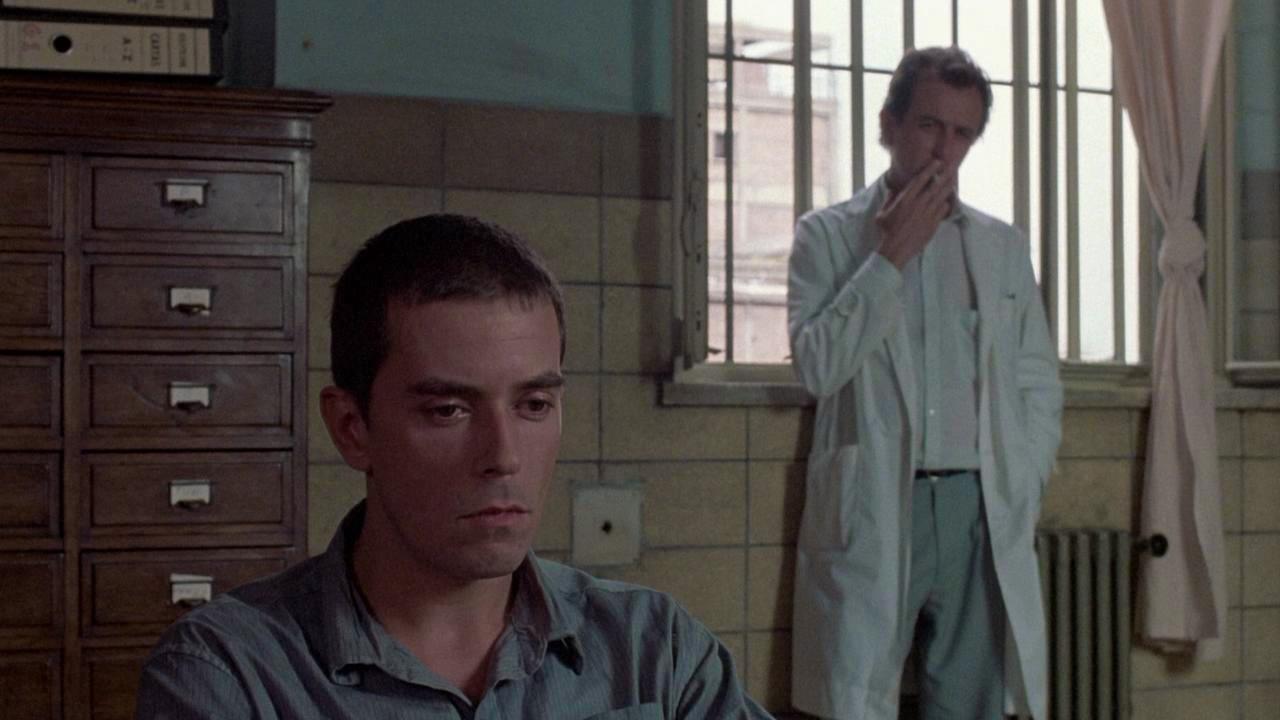
The film centers on the relationship between the enigmatic Rantés (Hugo Soto) and his assigned psychiatrist, Dr. Julio Denis (Lorenzo Quinteros). Denis, a man seemingly grounded in logic and weary professionalism, finds himself increasingly drawn into Rantés’s orbit. Is this patient suffering from a complex delusion, or could his calm, insightful observations about human cruelty, loneliness, and our capacity for self-destruction hold a truth too strange, too profound, to accept? Subiela masterfully avoids easy answers, instead using Rantés as a mirror reflecting the doctor’s own quiet desperation and the subtle hypocrisies of the ‘sane’ world outside the hospital walls.
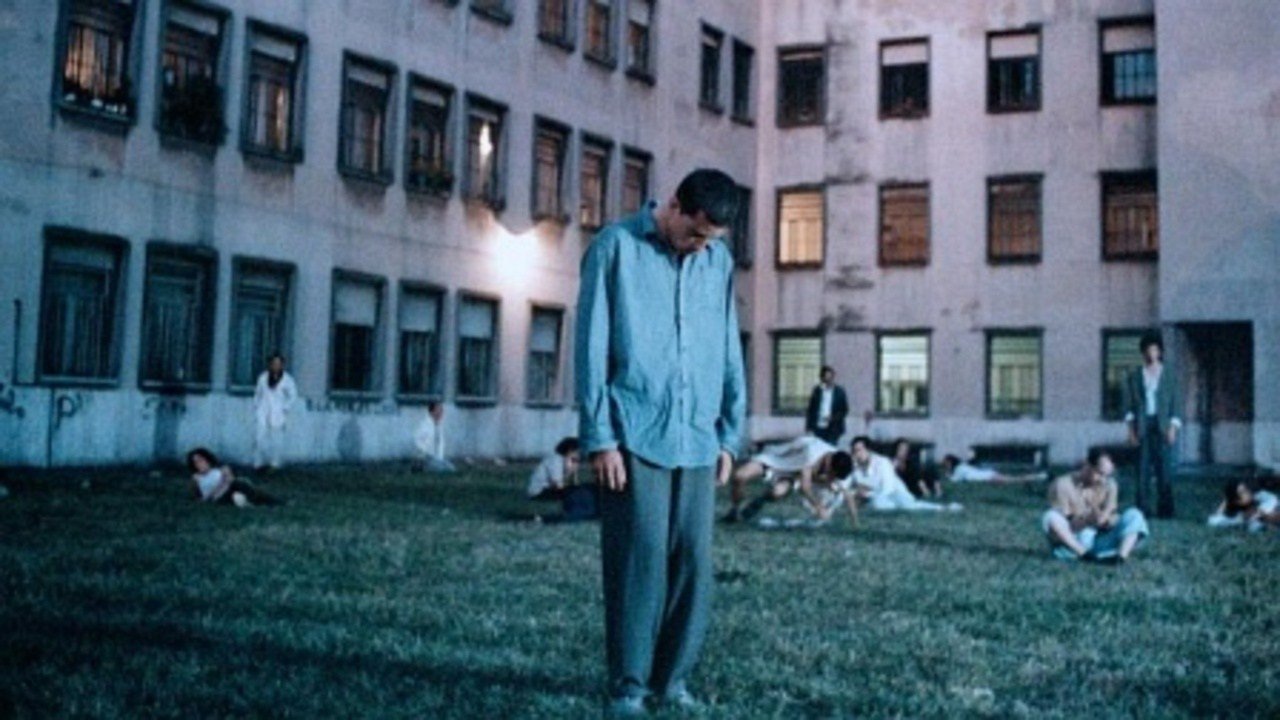
The atmosphere Subiela crafts is palpable. It's less about sci-fi spectacle and more about existential drift. The sterile, almost muted environment of the Borda Hospital (a real psychiatric facility in Buenos Aires where much of the film was shot, adding a layer of unnerving authenticity) becomes a microcosm of society itself. Rantés, often found standing motionless in the courtyard, facing southeast towards his supposed home, becomes a symbol of profound alienation – a feeling many of us, perhaps secretly, recognize within ourselves. Doesn't his quiet judgment on our species' failings still sting with relevance today?
Performances That Resonate
The film rests heavily on the shoulders of its two leads, and they deliver performances of staggering depth. Hugo Soto, as Rantés, is mesmerizing. He embodies an otherworldly stillness, his large eyes conveying a universe of observation and melancholic understanding without resorting to histrionics. There's a gentle, almost childlike quality to him juxtaposed with an ancient wisdom, making his claims simultaneously unbelievable and utterly compelling. It’s a performance of quiet power, subtle gestures, and unwavering conviction that makes you want to believe.
Counterbalancing Soto is Lorenzo Quinteros as Dr. Denis. His portrayal is a masterclass in internal conflict. We see the initial clinical detachment slowly erode, replaced by curiosity, empathy, and eventually, a deep, troubling affection. Quinteros lets us see the cracks in Denis’s professional facade, the loneliness that mirrors Rantés's own, albeit from a different galaxy of experience. His struggle – between the diagnosis demanded by his profession and the profound human (or non-human) connection he feels – is the film's aching heart. And Inés Vernengo, as Beatriz, a lonely woman who connects with Rantés through music, provides a vital emotional counterpoint, representing the simple, unanalyzed human warmth that Rantés seems to both study and crave.

Retro Fun Facts: Echoes and Origins
- The K-PAX Question: It's impossible to discuss Man Facing Southeast without mentioning the controversy surrounding the later American film K-PAX (2001), based on a 1995 novel. The similarities in premise are striking, leading Eliseo Subiela himself to feel his work had been plagiarized, though formal legal action proved difficult. Watching Man Facing Southeast first adds a fascinating layer to this cinematic debate.
- Budgetary Constraints, Artistic Gains: Made for a modest sum, the film uses its limitations to its advantage. There are no flashy special effects; the 'alienness' comes purely from Soto's performance and Subiela's evocative direction, proving that profound sci-fi often needs ideas more than spectacle.
- Critical Acclaim: While not a box office smash in the Hollywood sense, the film was a significant critical success, earning Argentina's official submission for Best Foreign Language Film at the 60th Academy Awards (though it wasn't ultimately nominated). It found its audience through festivals and, crucially for us, the home video market, becoming a beloved cult classic.
- Musical Soul: The use of music, particularly classical pieces and Dr. Denis's saxophone playing, is integral. Rantés's inexplicable ability to conduct the hospital orchestra or respond deeply to music adds another layer to his mystery – is it mimicry, or something more profound?
A Quiet Transmission That Lingers
Man Facing Southeast isn't concerned with proving Rantés's origins. Instead, it uses his presence to ask fundamental questions about what it means to be human, the nature of belief, the limitations of reason, and the pervasive loneliness that can afflict even those surrounded by others. It explores the uncomfortable idea that sometimes, the 'mad' might possess a clearer view of reality than those who enforce its norms. Subiela’s direction is patient, allowing moments of silence and observation to speak volumes, trusting the audience to grapple with the ambiguity.
Watching it again now, decades after first encountering it on a worn VHS tape, its power hasn't diminished. If anything, its critique of societal conformity and its plea for empathy feel even more resonant. It avoids sentimentality, yet it's deeply moving, leaving you with a lingering sense of melancholy and wonder.
Rating: 9/10
This near-perfect score is earned through the film's profound thematic depth, the unforgettable performances by Soto and Quinteros, Subiela's masterful direction, and its enduring power to provoke thought long after the credits roll. It’s a testament to the quiet strength of world cinema often discovered in the golden age of video stores – a film that doesn't shout, but whispers truths that echo.
Man Facing Southeast remains a haunting, intelligent piece of filmmaking, a philosophical inquiry disguised as a sci-fi mystery. What lingers most isn't the question of where Rantés came from, but the reflection of ourselves we see in his observant eyes.